Insight Report
There is no war on the Bangladesh-Myanmar border. But people are dying. Someone cooking in their own kitchen. Someone playing in their courtyard. Someone working in a banana grove. Someone who went into the hills and never came back.
Every time, the same scene.
Gunfire on the other side. Mortar shells fall. Armed groups clash. Sometimes a landmine explodes.
Then a family in some border village of Bangladesh is changed forever. News gets reported. Officials visit the scene. In some cases, a small amount of financial assistance arrives.
Then everything stops. Investigations stop. Justice stops. The visible presence of the state stops. But the grief of the border people does not.
Death Certificate Says ‘Natural Disaster’ After Mortar Shell Kills Woman in Her Kitchen
5 February 2024. In a home on the border edge of Ghumdhum Union in Naikhongchhari, Hosne Ara Begum was cooking.
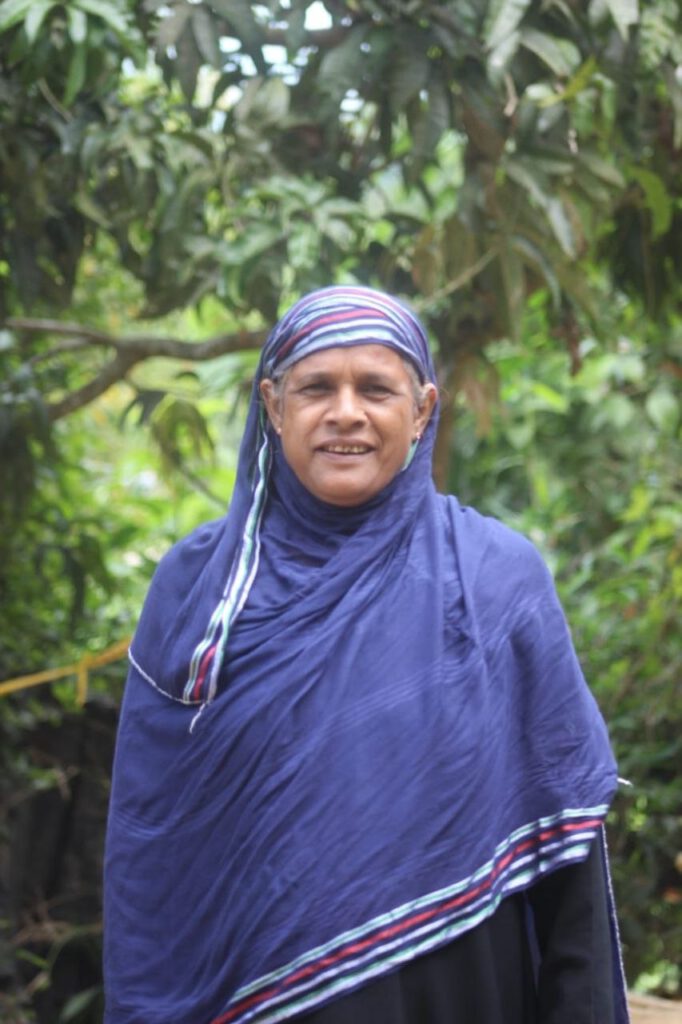
At the time, fierce fighting was raging inside Myanmar. Suddenly, a mortar shell came flying from across the border.
Hosne Ara was killed on the spot. A Rohingya labourer died in the same incident.
The autopsy report and hospital documents clearly stated that she died from blast injuries.
But the family alleges that the death certificate later issued by the Union Parishad listed the cause of death as “natural disaster.”
Her son, Md. Ibrahim, says: “The MSF hospital papers clearly say death by bomb blast. But the Union Parishad death certificate says natural disaster. My question is — if a bomb comes from Myanmar and kills someone, how is that a natural disaster?”
In his words, that single phrase captures the entire political and administrative reality.
“Even a small child wants justice for their mother’s murder. Losing a mother means an entire family is destroyed. But we have come to understand — in this country, if you are killed at the border, there are very few places to seek justice.”
Hosne Ara’s husband, Badsha Mia, filed a case. But more than two years have passed with no visible progress.
“Police were saying they couldn’t catch the accused. If you want to keep the case going, go ahead — if not, leave it. After that, nothing happened.”
After 27 Days of Fighting, Hujaifa Loses the Battle
Hujaifa was just 12 years old. She was playing in the courtyard with friends. A bullet came flying from the direction of the border. She was critically wounded and taken first to Chittagong, then to Dhaka.
After fighting for his life in the ICU for 27 days, the child died.
Her father, Jasim Uddin, still carefully keeps his daughter’s toys, socks, and the half-eaten packet of dal-bhaja from the day it happened. He kept stopping mid-sentence as he spoke.
“She wasn’t fighting a war. She was sitting at a shop eating snacks, playing with toys. A bullet hit a child’s body. Then she fought death for 27 days.”
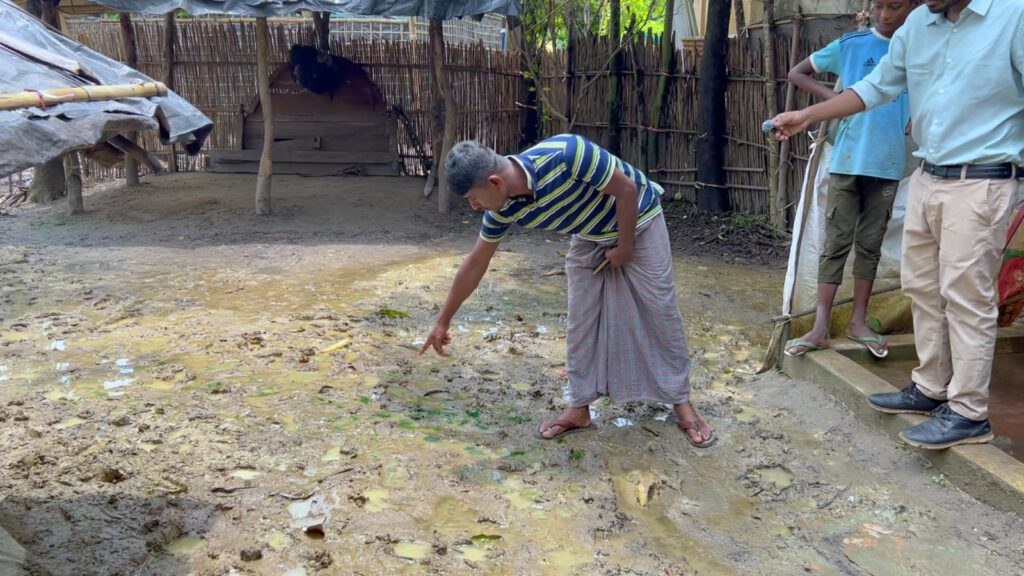
He says that at the time, the Arakan Army and the Rohingya armed group RSO were exchanging fire. At one point, armed members crossed into Bangladeshi territory and continued shooting. One of those bullets struck Hujaifa as she played in the courtyard.
The family has filed no case. Because they do not know against whom to file one.
“The bullet came from across the border. But whose door do I knock on for justice?”
Father Killed in Mine Blast Two Weeks Before His Child Was Born
24 May. In a hilly banana grove between border pillars 41 and 42 in the Tumru border area, a group of labourers had gone to work.
Suddenly, an explosion. Shaifuching Tanchangya, Akyamong Tanchangya, and Chikyang Tanchangya were killed on the spot.
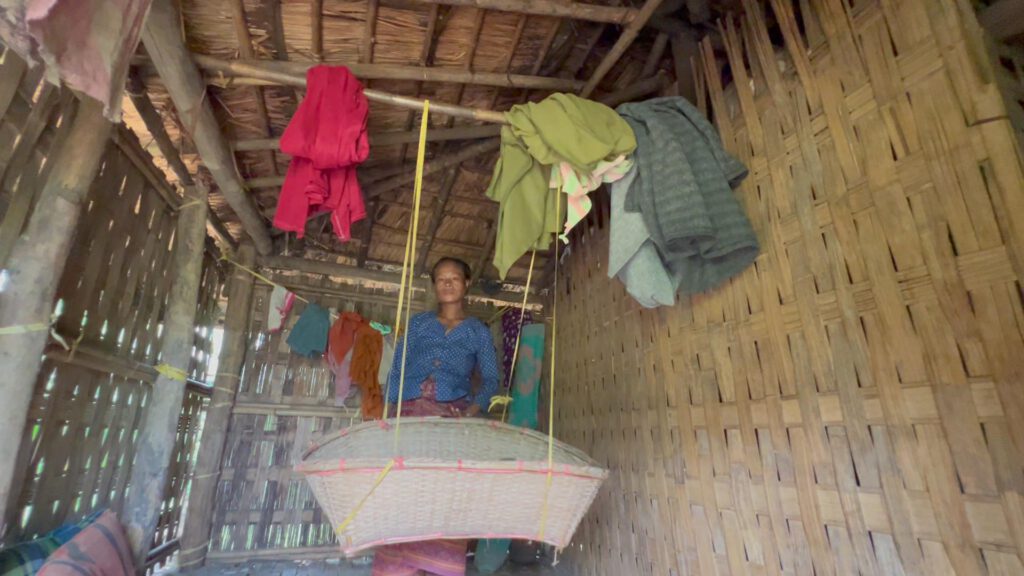
All three were from Fatrajhiri area of Valukyapara in Ghumdhum Union, and all were the primary breadwinners of their families.
Shaifuching’s wife, Makingching, gave birth just seven days after the incident — she had lost her husband nearly two weeks before she would hold her child.
“He was supposed to come back with money from selling bananas. He never came back.”
As government assistance, she received only a few thousand taka.
Nothing after that. No case. No news of any investigation. No compensation.
Local Union Parishad member Angsai Marma says: “It was a devastating incident. While trying to save one person, two more died. Three families were destroyed overnight.”
‘What Is the Point of Talking?’
Dukmala Tanchangya lost her husband Akyamong Tanchangya in the same blast. But she does not want to speak to journalists.
Neighbours say her resentment toward the state runs so deep that she believes talking serves no purpose.
From a distance, Dukmala shouts: “We didn’t get justice. Instead, now they’re blaming us.”
This silence reflects the long experience of the border people.
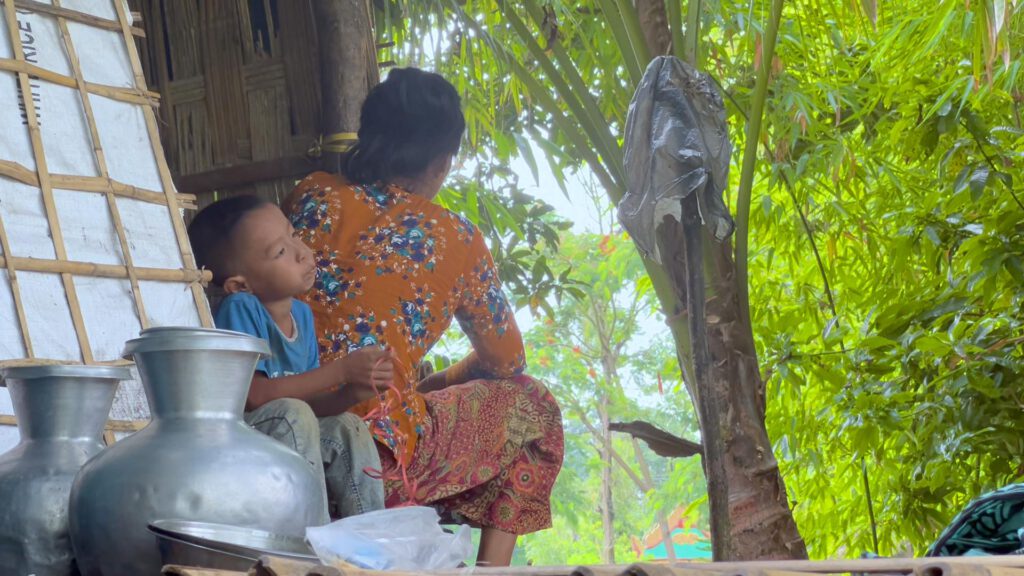
They have seen people die, get injured, and go missing — but not a single incident has ever reached a judicial conclusion.
The Missing Man — And No Search
Wamong Chakma has been missing for nearly four months. His wife, Usasing Chakma, says he went into the hilly border area to collect bamboo and never returned.
The family does not even know if he is alive. Most strikingly, they have not filed any case.
Because they believe it would yield nothing.
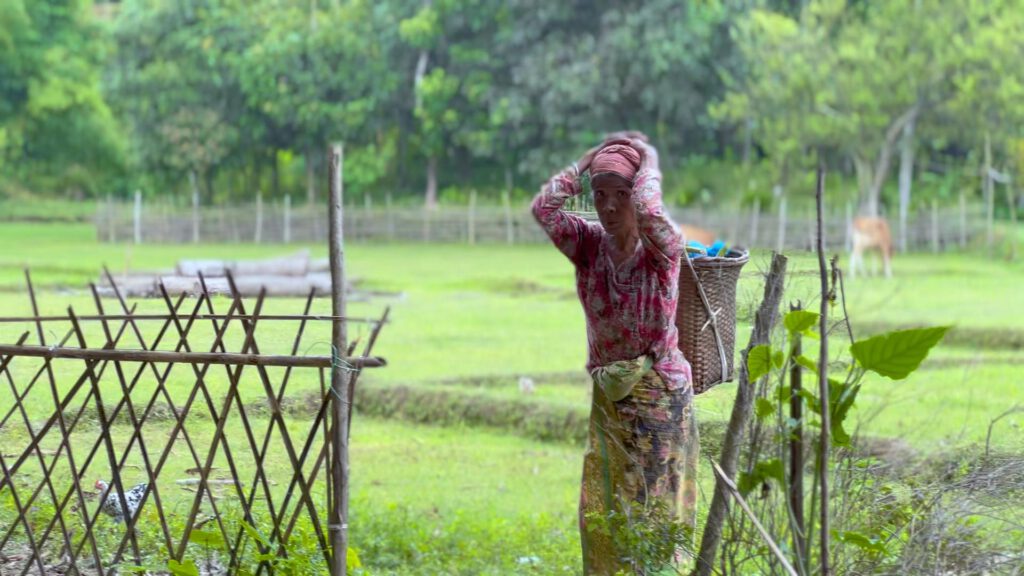
Usasing says: “We contacted the police and BGB, but they said they could not go into that area. There is no news of whether Wamong is even alive.”
Naikhongchhari Police Station OC Mozammel Haque says GD entries have been made for at least two missing person cases in the border area — including Sumon Tanchangya and Waimong Chakma.
“No trace has been found yet. The matters are under investigation,” he says.
He acknowledges, however, that police capacity for investigation in the remote border areas is limited.
“Legally, BGB has the primary responsibility in border areas. For any incident, we have to coordinate with them.”
Hanif Lost His Leg in His Own Country
Md. Hanif, a resident of Lambabil area in Whaikyang, Teknaf, lost a leg to a mine explosion while walking to his own fish enclosure.
The incident happened inside Bangladesh — he was walking along the Naf riverbank toward his enclosure.
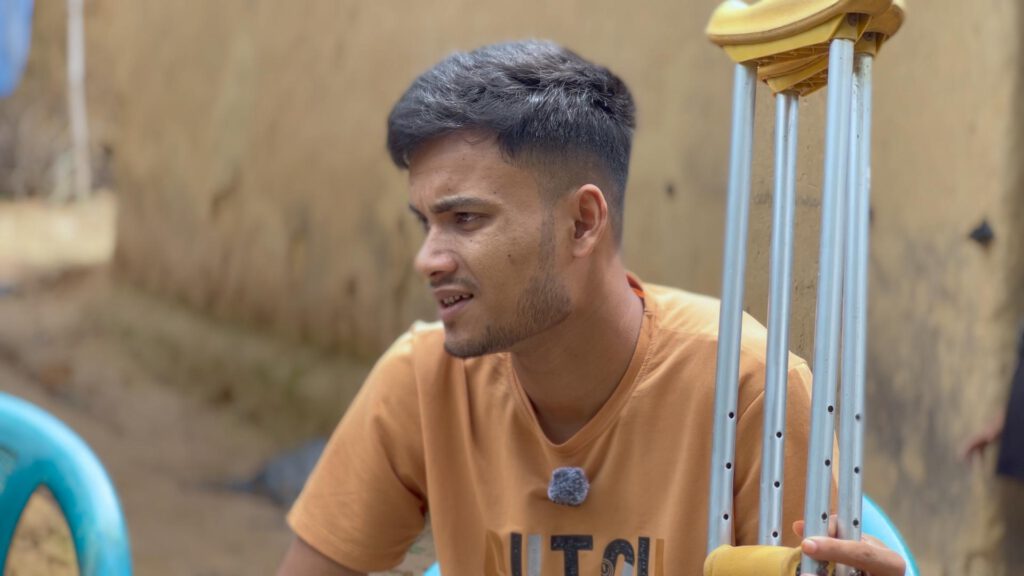
Suddenly, an explosion. In an instant, one leg was severed from his body.
While hospitalised at Chittagong Medical College Hospital, he received 30,000 taka in assistance from the BGB.
Nothing came after. He now lives with his wife and child, dependent on his younger brother’s income.
Hanif says the explosion occurred roughly 20 feet inside the embankment, where enclosures are located before the Naf river. He believes mines may be scattered even further inland.
He is now unemployed, staying home. His household runs entirely on his younger brother’s earnings.
“Who do I file a case against? Even the police didn’t come.”
What Is Happening Inside the Border?
Locals allege that armed groups of various kinds operate across wide stretches of the border.
Some name Rohingya armed factions. Others mention the Arakan Army. Still others say ordinary people have no way of knowing who belongs to which side.
As a result, going to work in the hills, grazing livestock, or visiting plantations has become dangerous.
Ulasing Tanchangya, a resident of Fatrajhiri area in Valukyapara, Ghumdhum Union, says: “If we don’t go to the hills, we can’t eat. But now going means risking death.”
He explains that people in this area grow bananas, papayas, ginger, mangoes, jackfruit, and betel leaves on the hills to earn a living. Unable to access their land, they are now facing extreme financial hardship and food insecurity.
What Does the BGB Say?
34 BGB Commanding Officer Lieutenant Colonel S.M. Khairul Alam says an investigation is underway into the source of the mines found near the border.
Preliminary assessment suggests that during clashes between Myanmar’s junta forces and the Arakan Army, some mines may have been planted or left behind in areas near the Bangladesh border.
“The matter is still under investigation. We don’t want to say anything definitively.”
He adds that BGB is conducting awareness campaigns in border areas — going house to house, warning residents not to touch any suspicious object and to immediately inform BGB.
He also notes that in many hilly border areas, the zero line is not clearly demarcated, so locals often cannot tell whether they are inside Bangladesh or have crossed to the other side.
Why This Cycle of Impunity?
South Asian geopolitics analyst Altaf Parvez believes the root cause is the lack of effective control over the border.
“There is a state of war at the border. There is the Arakan Army, there are Rohingya armed groups, there is the Myanmar military. But ordinary people are bearing the greatest cost.”
He argues that keeping the border safe is the state’s responsibility.
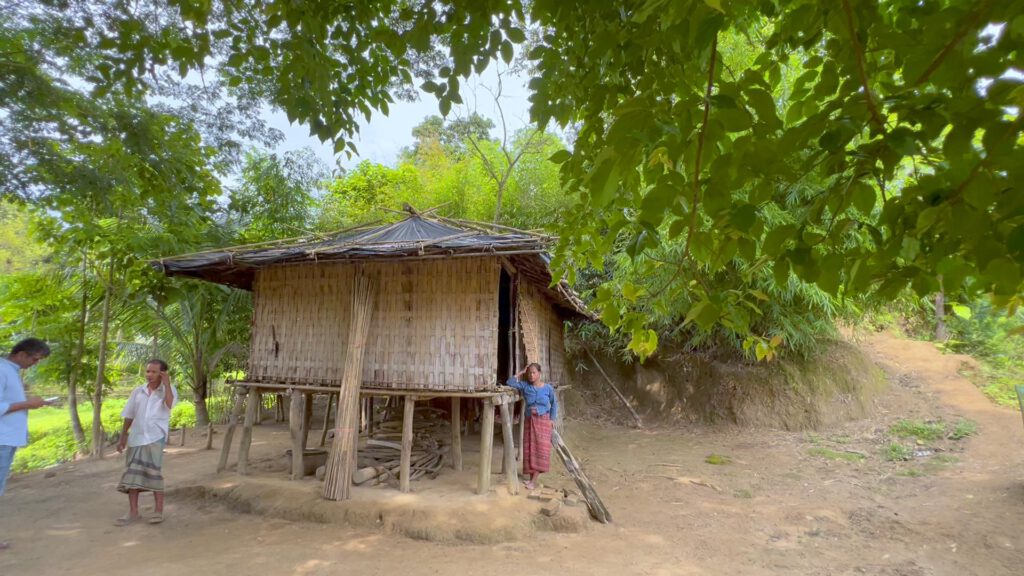
“But in reality, border people are living in a kind of uncertainty. Everyone knows what is happening, but there is very little social or political discussion about it.”
In his view, these people are effectively among Bangladesh’s most marginalised citizens.
“City people live safely. Border people have to live with the risk.”
He adds: “These people are not at the centre of any discussion. They are not part of power politics. So their deaths do not become electoral issues.”
What Should the State Do?
Former Myanmar consulate head and security analyst Major (Retd.) Mohammad Emdadul Islam says the current situation is extremely complex — because in most cases the accused is not a state, but non-state armed groups.
“Bangladesh cannot take direct judicial action against groups like the Arakan Army. But it is urgent to strengthen mine detection, mine clearance, and preventive security measures along the border.”
He believes Bangladesh should build stronger preventive measures at the border and increase diplomatic pressure on Myanmar.
Are Border People Second-Class Citizens?
Hosne Ara. Hujaifa. Shaifuching. Akyamong. Chikyang. Wamong. Hanif.
These are just a few names.
But within these names lies the long history of insecurity, fear, and impunity endured by the border people.
They did not fight. They are not members of any armed group.
They were simply at home, working their land, catching fish, raising their children.
But they are the ones paying the price of war.
Coxs Bazar District Bar Association President Abdul Mannan asked the question: if a Bangladeshi citizen is killed by a mortar shell, shot dead by a bullet, disabled by a mine explosion, or goes missing inside Bangladesh — who bears responsibility for that?
“And if responsibility is never determined, where will justice come from? In one word — the state itself must take responsibility for the safety of its citizens.”
People are dying at the border. But as they die, the possibility of justice seems to die with them — and that, perhaps, is the greatest tragedy in all these stories.
Abdul Mannan asked: “Are the people of the border second-class citizens?”