By Staff Correspondent | Cox’s Bazar
When the rain starts falling over the hills of Camp 20 in Ukhiya, Senoara Begum no longer sleeps.
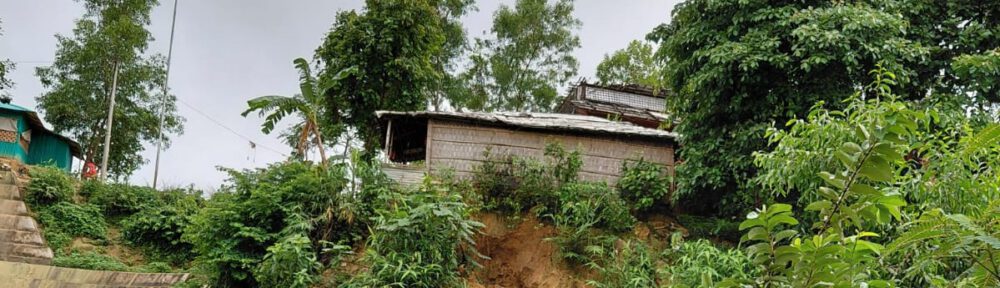
Her shelter — a fragile structure of bamboo poles and tarpaulin clinging to a steep hillside — sits beneath slopes that have claimed dozens of lives in the Rohingya refugee camps over the past five years.
“There is nowhere safe nearby to move,” she says quietly. “When aid agencies ask us to relocate, the places they offer are far from our neighbours and the community we’ve built. We don’t want to leave. But if the hillsides were properly maintained, the danger would be much less.”
For Senoara, the arrival of the monsoon is no longer simply a change in season. It is the return of uncertainty.
Across the vast refugee settlements of Ukhiya and Teknaf, thousands of Rohingya families live on, or directly beneath, steep hillsides stripped of their natural vegetation to make room for one of the world’s largest refugee settlements. Every spell of heavy rain weakens the soil. Every monsoon brings the fear that another hillside could collapse.
That fear is grounded in experience.
According to the UN Refugee Agency (UNHCR), landslides between 2021 and 2026 have killed 28 people and injured at least 80 across the camps. Twelve people died in 2024 alone, making it the deadliest year in the period. This year, although the rainy season has only just begun, two more people have already been killed and ten others injured.
“Landslides have claimed 28 lives and injured 80 people across the camps between 2021 and 2026,” says Shari Nijman, Communications Officer for UNHCR Bangladesh.
“Many vulnerable slopes remain without adequate stabilisation, increasing the exposure of refugee households and critical infrastructure to monsoon-related hazards.”
A Crisis Beyond the Rain
The danger is not caused by rainfall alone.
Humanitarian agencies say a deepening global funding crisis has forced them to scale back some of the very measures designed to prevent disasters.
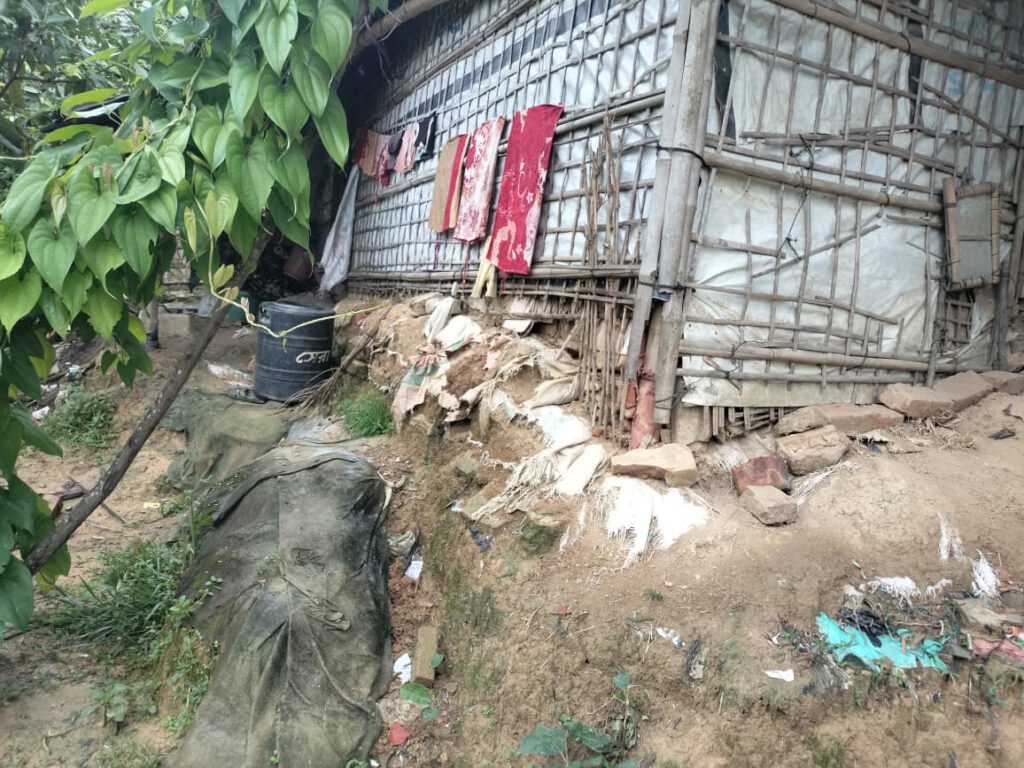
Projects such as slope stabilisation, bamboo terracing, drainage maintenance and shelter reinforcement have been reduced as aid organisations prioritise life-saving food assistance and protection services amid shrinking donor support.
“The reduction in funding has significantly affected preventive engineering work,” humanitarian officials say, warning that vulnerable slopes are becoming increasingly difficult to maintain as resources diminish.
Relocation, often presented as the safest option, has proved equally challenging.
“Relocating families from the most dangerous hillside plots has long been one of the central challenges in camp management,” Nijman explains.
“These settlements are among the most densely populated places on earth. Vacant land is virtually non-existent. Many families are also reluctant to move because relocation often means losing access to livelihoods, markets and the social networks they have rebuilt since fleeing Myanmar in 2017.”
Living With Fear
In Camp 4, Salim Ullah says fear has become part of his family’s nightly routine whenever heavy rain begins.
“When it rains, I stay awake wondering when the hill will come down,” he says.
“I live on the slope with my children. We are always frightened.”
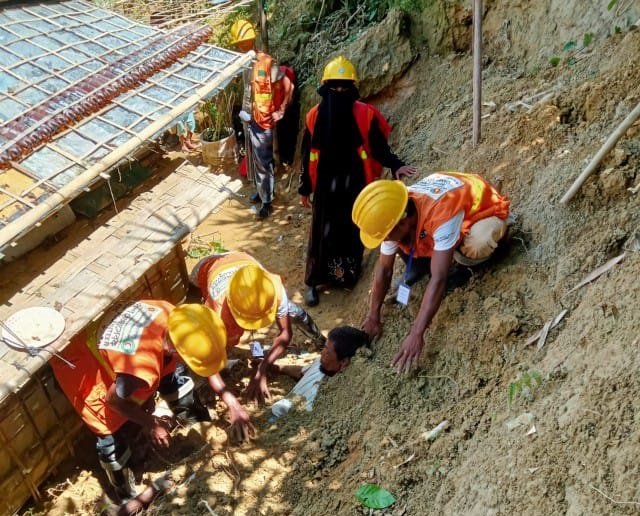
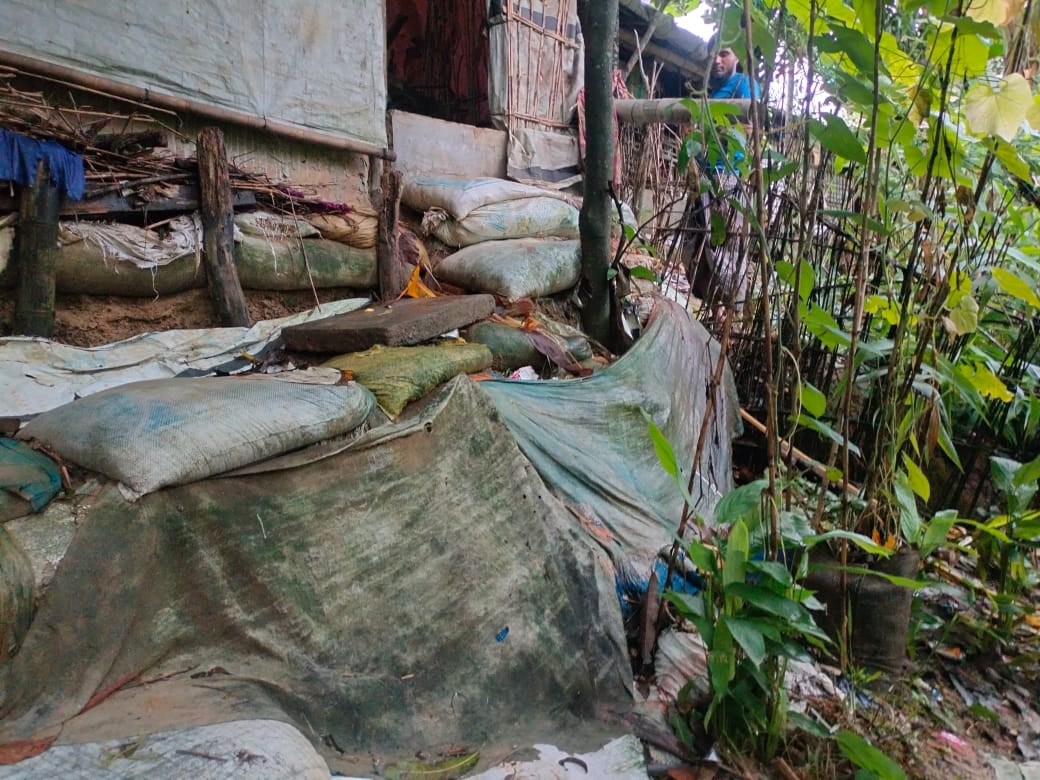
Across the camps, signs of self-protection are visible almost everywhere.
Families cover drainage channels with sheets of plastic to slow erosion. Sandbags are stacked against fragile shelters. Bamboo poles are driven into unstable embankments in makeshift attempts to hold the soil together.
But many acknowledge these are temporary solutions against a much larger threat.
Authorities on Alert
Bangladesh authorities say preparations are underway.
Refugee Relief and Repatriation Commissioner Md Mizanur Rahman says disaster management committees in every camp have been activated ahead of the monsoon. Awareness campaigns are continuing, while high-risk areas are being closely monitored.
“If conditions deteriorate, residents living in the most vulnerable locations will be evacuated,” he says.
Meanwhile, the Cox’s Bazar Meteorological Office reports that around 237 millimetres of rainfall has fallen over the past three weeks.
Assistant Meteorologist A.B. Hannan warns that rainfall is expected to intensify in the coming days, increasing the likelihood of further landslides.
Race Against Time
UNHCR says it continues to implement engineering and nature-based solutions wherever funding permits.
These include retaining walls, improved drainage systems, geotextile reinforcement and the planting of Vetiver grass, whose deep roots help bind loose soil together.
But the agency warns that without sustained international funding, such interventions cannot keep pace with growing risks.
As another monsoon settles over the camps, the question is no longer whether the hills will be tested — but whether enough has been done to prevent them from collapsing.
For Senoara Begum, the answer feels painfully uncertain.
Another rainy season has arrived.
And once again, she waits through the night, listening for the sound that every family living beneath the hills fears most.