Bay insight | Cox’s Bazar
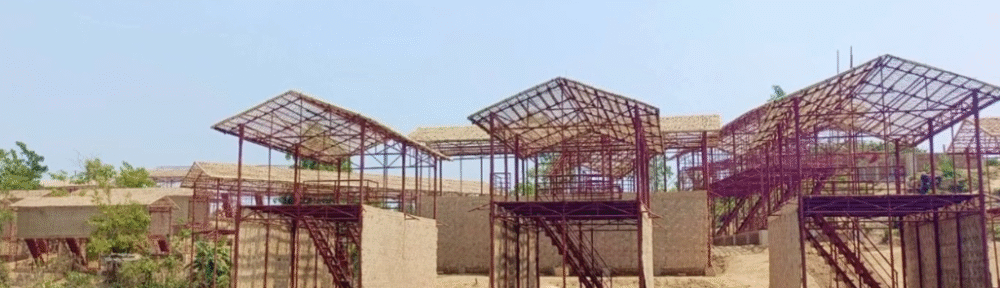
A controversy has emerged over the construction of a new type of two-storey housing in the Kutupalong refugee camp in Ukhiya, Cox’s Bazar.
Locals said the use of concrete bases, steel structures, and hill-cutting for road construction suggests the infrastructure is “not temporary, but an indication of permanent settlement.”
The Forest Department has also raised objections, saying hills have been cut during the construction process.
However, the Refugee Relief and Repatriation Commission (RRRC) and UNHCR said the structures are still temporary.
At least 888 two-storey shelters are being built in Extension ‘E’ Block of Camp-4 in Kutupalong, with around 80–90 percent of the work already completed. The Forest Department said hills have been flattened for construction and roads about 10 feet wide have been built.
Statements were sought from UNHCR, the RRRC, and the Forest Department regarding the issue.
Forest Department alleges hill cutting
Ukhiya Range Officer of Cox’s Bazar South Forest Division, Abdul Mannan, said, “Two-storey steel-structured shelters are being constructed for Rohingyas in Camp-4 after cutting hills. We have come to know about the matter and strongly protested it.
“This is reserved forest land. However, as the camp area is under the jurisdiction of the relevant authorities, we are unable to exercise direct control. Hundreds of workers are involved, so construction is progressing rapidly. Around 800–900 shelters are already 80–90 percent complete.”
He said the work is causing significant environmental damage, including hill cutting and deforestation. “We tried to resist from our position, but given the scale of the work, it was not effective.”
He added, “The area was previously reserved forest land. The extent of land leveling indicates hills have been cut. You should also take statements from the RRRC and camp authorities.”
Commissioner says “nothing permanent”
RRRC Commissioner Mohammad Mizanur Rahman said the structures are being misinterpreted.
He said the shelters are being built based on a design approved by an inter-ministerial committee around 2021–22.
“Although steel structures are being used, they are assembled with nuts and bolts so they can be dismantled easily. This is not a permanent structure,” he said.
Regarding the use of concrete, he said, “It is not a full concrete base; rather, a floor-like foundation is being provided so the structure does not sit directly on the ground.”
He added that work has been temporarily halted following objections over hill cutting.
UNHCR says “improved design for safety”
UNHCR said the new shelters are designed to improve disaster resilience.
Mosharraf Hossain, communications officer of UNHCR Bangladesh, said bamboo and plastic sheets remain the primary materials, with steel pipes of up to three inches in diameter used, and the structures are connected with nuts and bolts so they can be dismantled easily.
“These shelters under construction are not permanent structures and do not indicate any change in the temporary nature of Rohingya stay in Bangladesh. The design has been approved by the relevant authorities. It reflects a collective humanitarian effort to ensure safer living conditions, while respecting Bangladesh’s long-standing position that safe, voluntary, and dignified repatriation remains the ultimate solution,” he said.
Local concerns
A clear gap is visible between ground realities and policy positions.
On one hand, locals see hill cutting, road construction, and two-storey structures as signs of a long-term presence. On the other, government and international agencies insist the shelters are improved but temporary solutions.
Palongkhali Union Parishad Chairman M Gofur Uddin Chowdhury said the construction is concerning.
“If strong infrastructure is built, it may pave the way for permanent settlement of Rohingyas, which could hinder the repatriation process,” he said.
The Bay Insight